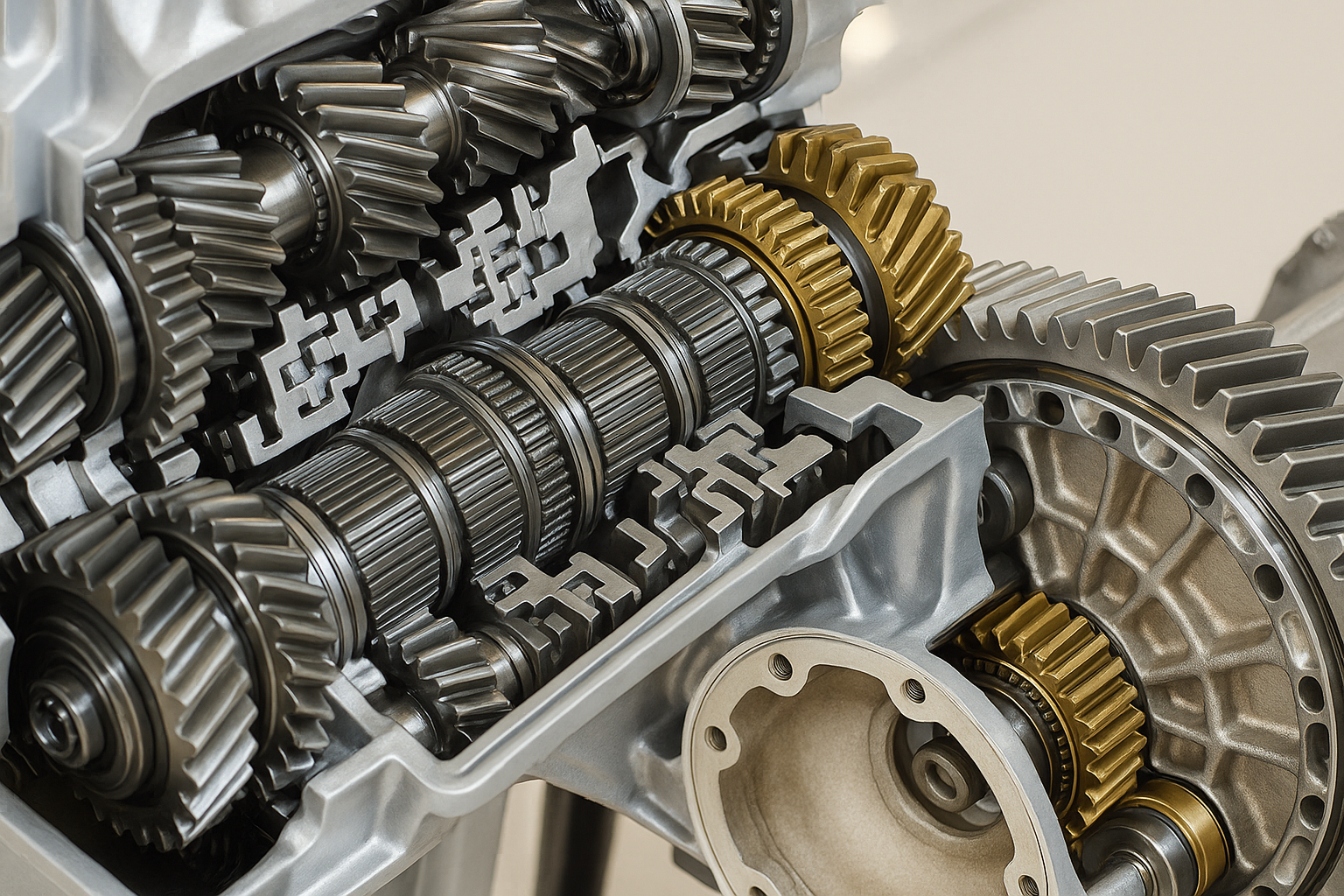
Gear failure rarely happens without warning. Most industrial gears show clear signs of wear long before they fail catastrophically. Catching these signs early saves you from costly unplanned downtime, damaged shafts, and wrecked bearings. Here are the 5 key warning signs to watch for.
1. Unusual Noise or Vibration
Healthy gears produce a consistent hum. If you notice any of these changes, it's time to investigate:
- Grinding or crunching — Indicates tooth surface damage or metal-to-metal contact from inadequate lubrication
- Clicking or tapping — Could mean a chipped or broken tooth
- Increased vibration — Worn teeth change the mesh pattern, creating uneven forces
If noise has gradually increased over weeks or months, the wear pattern is likely progressing. Don't wait for it to become critical.
2. Visible Tooth Wear or Pitting
Regular visual inspection can catch problems early. Look for:
- Pitting — Small craters on the tooth surface caused by fatigue. Starts as "micro-pitting" (frosted appearance) and progresses to visible pits.
- Scoring — Scratch marks along the tooth face from contaminated lubricant or metal particles
- Uneven wear — One side of the tooth wearing faster than the other, indicating misalignment
- Tooth thinning — Teeth that look noticeably thinner than new gears have exceeded their safe operating life
3. Increased Backlash
Backlash is the small gap between meshing gear teeth. Some backlash is normal and necessary for lubrication. But if backlash has increased noticeably from when the gears were new, it means the teeth have worn down.
Excessive backlash causes:
- Positioning errors in precision machinery
- Impact loads when direction reverses
- Accelerated wear on remaining tooth material
Measure backlash periodically with a dial indicator. If it's more than 50% above the original specification, plan for replacement.
4. Metal Particles in Lubricant
Your gear oil tells a story. During routine oil changes or analysis:
- Fine metallic particles — Normal wear is producing more debris than usual
- Larger chips or flakes — Teeth are actively breaking down
- Discolored or burnt oil — Overheating from increased friction due to worn surfaces
Oil analysis is one of the most reliable predictive maintenance tools for gearboxes. If your facility doesn't do regular oil analysis on critical gearboxes, it should.
5. Temperature Increase
Worn gears generate more friction, which generates more heat. If a gearbox is running hotter than it used to — even by 10-15°C — it's worth investigating. Common causes:
- Worn tooth profiles creating more sliding contact
- Misalignment forcing gears to work harder
- Lubricant breakdown reducing cooling and film strength
Use an infrared thermometer to baseline gearbox temperatures and track changes over time.
What to Do When You Spot These Signs
- Don't ignore it. Gear wear is progressive — it only gets worse.
- Inspect thoroughly. Remove covers if possible and examine the tooth surfaces.
- Check alignment. Misalignment accelerates wear and can destroy new gears too.
- Order replacement gears early. Custom gears take time to manufacture. Don't wait until failure to start the process.
- Consider upgrading the material. If gears are wearing out faster than expected, a harder material (e.g., upgrading from EN8 to EN24) can dramatically extend service life.
Get Replacement Gears Manufactured
JS Engineering Works manufactures custom replacement gears with typical lead times of 1-2 weeks. We can work from your existing drawings, or reverse-engineer from a sample gear. From spur gears to helical and bevel gears, in materials from mild steel to case-hardened EN36. Send us your requirements and we'll get you a quote within 24-48 hours.