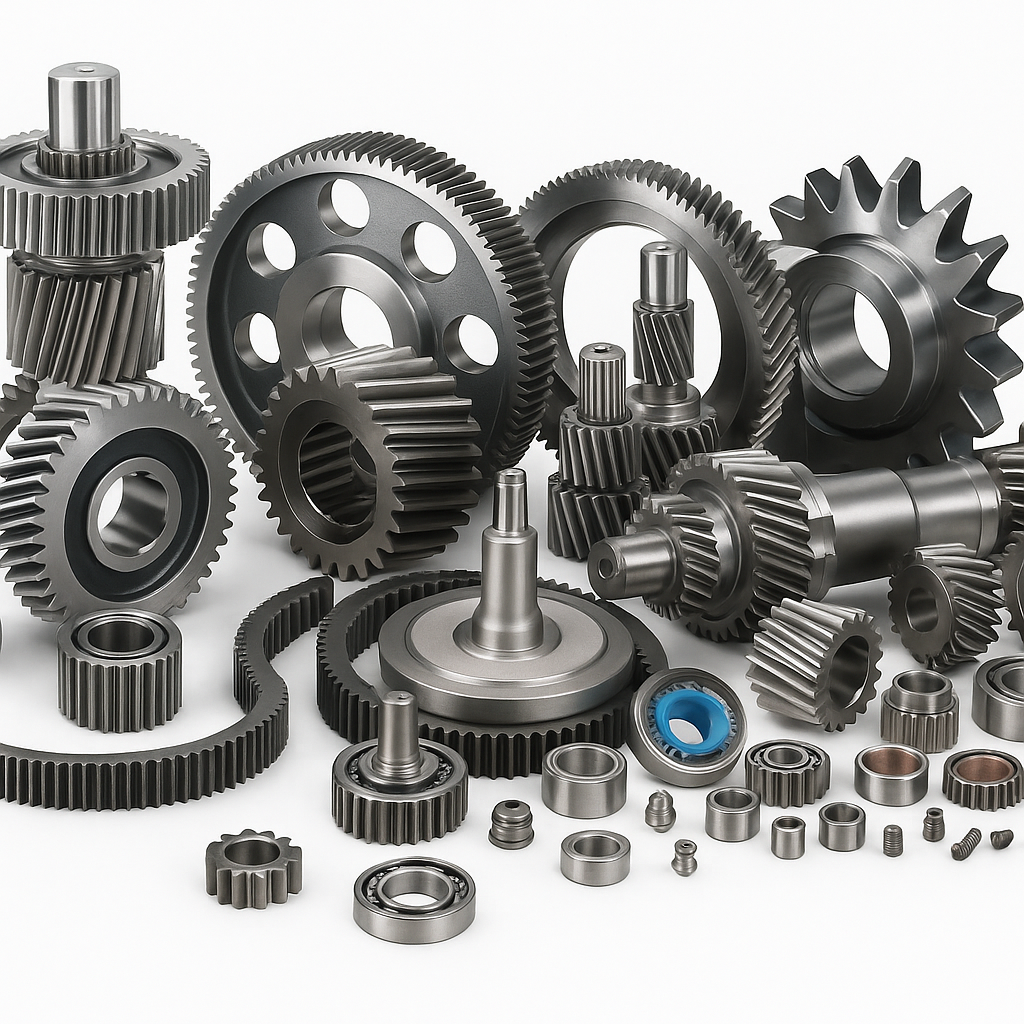
Selecting the right material for your gears is one of the most critical decisions in any power transmission project. The wrong choice can lead to premature wear, noise, or catastrophic failure. This guide covers the most common gear materials, their properties, and when to use each one.
Key Factors in Gear Material Selection
Before comparing specific materials, consider these factors for your application:
- Load and torque — How much force will the gear transmit?
- Speed (RPM) — Higher speeds generate more heat and require better fatigue resistance.
- Operating environment — Exposure to moisture, chemicals, or extreme temperatures?
- Noise requirements — Some applications need quiet operation.
- Budget — Material cost affects the total project cost significantly.
Common Gear Materials Compared
EN8 (Medium Carbon Steel)
EN8 is one of the most widely used gear materials for general-purpose applications. With a carbon content of 0.36-0.44%, it offers a good balance of strength and machinability.
- Tensile strength: 550-700 MPa
- Best for: Low to medium-load gears, non-critical applications
- Pros: Low cost, easy to machine, readily available
- Cons: Limited hardness, not suitable for high-stress applications
EN24 (Nickel-Chromium-Molybdenum Steel)
EN24 is a through-hardening alloy steel that offers significantly higher strength than EN8. It's the go-to choice for demanding applications.
- Tensile strength: 850-1000 MPa
- Best for: High-load gears, shafts, heavy-duty machinery
- Pros: Excellent fatigue resistance, good toughness, can be heat-treated to 55 HRC
- Cons: More expensive, harder to machine than EN8
EN36 (Case-Hardening Steel)
EN36 is a nickel-chromium case-hardening steel. It develops an extremely hard surface (60+ HRC) while maintaining a tough core — ideal for gears that face surface wear and impact loads.
- Tensile strength: 1000-1250 MPa (after case hardening)
- Best for: High-performance gears in automotive, aerospace, and heavy machinery
- Pros: Exceptional wear resistance, hard surface with tough core
- Cons: Requires case-hardening process, highest material cost
Stainless Steel (SS304/SS316)
Stainless steel gears are used where corrosion resistance is critical. SS304 handles most environments; SS316 is preferred for marine or chemical exposure.
- Best for: Food processing, pharmaceutical, marine, and chemical industry
- Pros: Corrosion resistant, hygienic, good appearance
- Cons: Lower hardness than hardened carbon steel, work-hardens during machining
Brass
Brass gears are commonly used as the worm wheel in worm gear sets. The softer brass wears preferentially, protecting the more expensive worm shaft.
- Best for: Worm gears, low-load applications, decorative uses
- Pros: Low friction, quiet operation, corrosion resistant, self-lubricating properties
- Cons: Low strength, not suitable for high-load applications
Quick Selection Guide
| Application | Recommended Material |
|---|---|
| General purpose, low cost | EN8 |
| Heavy-duty, high torque | EN24 |
| High-performance, maximum wear resistance | EN36 (case hardened) |
| Corrosive or wet environments | SS304 / SS316 |
| Worm gear sets, quiet operation | Brass |
Need Help Choosing?
At JS Engineering Works, we've been manufacturing custom gears for over 30 years. Our team can recommend the optimal material for your specific application based on load analysis, operating conditions, and budget. Request a quote with your drawing and we'll provide material recommendations along with your estimate.